The machine that changed our understanding of human history - Max G. Levy
324,162 Views
464 Questions Answered
Let’s Begin…
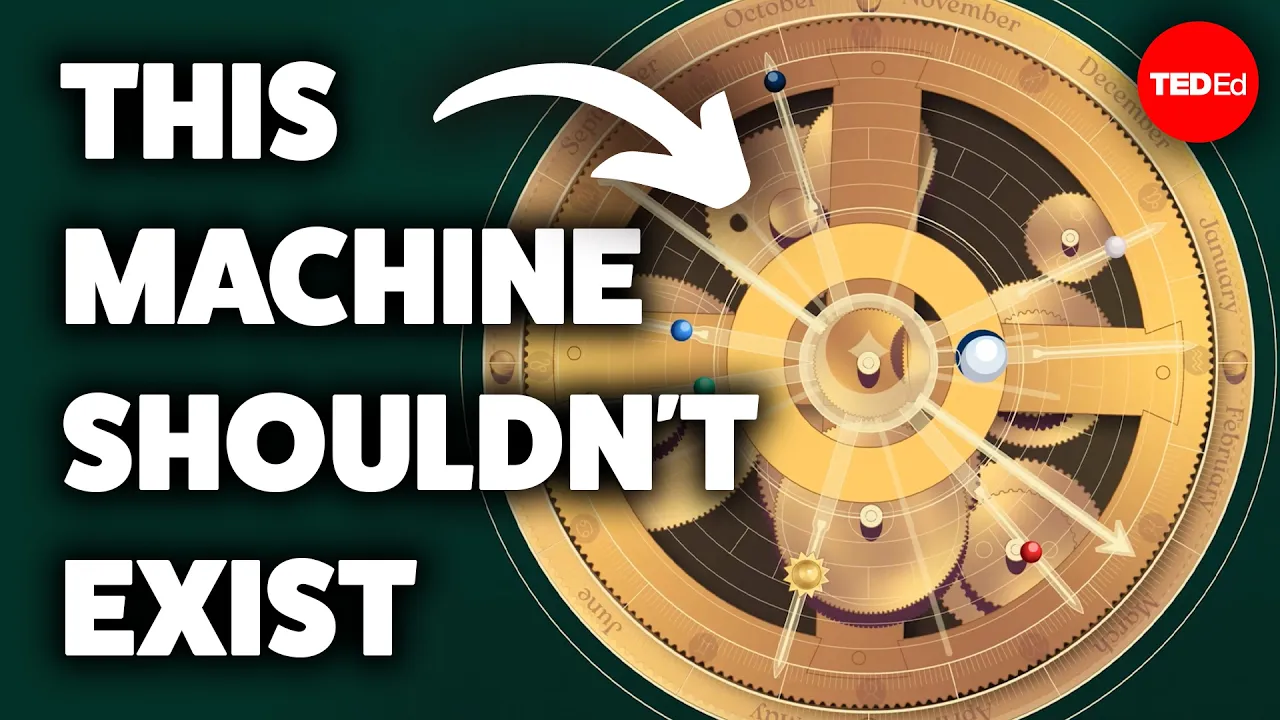
In 1900, Greek divers stumbled upon a 2,000-year-old shipwreck whose contents would shake our understanding of the ancient world. Among the remains were fragments of mangled wood and corroded metal, which archaeologists soon realized were parts of the oldest geared device ever discovered — and humankind’s first computer. So, how did it work? Max G. Levy explains the Antikythera mechanism.
This video can't load.
Your network might block YouTube, for example at school. Ask your teacher or an administrator for help, or watch the video at home.
Watch on YouTubeCreate and share a new lesson based on this one.
Additional Resources for you to Explore
While experts have put forth strong theories about what Antikythera’s gears could calculate and the details of its astronomical calendar, many ideas are still up for debate. For example, some researchers believe the device tracks a 354-day lunar calendar rather than a 365-day calendar, according to this story from the New York Times.
Another study contends that the Antikythera mechanism had major design flaws. Read an in-depth story about the discovery of the Antikythera mechanism in this Nature story from 2006.
Did this video make you wonder how analog computers might be used today? One possibility is that analog computers could make artificial intelligence systems more efficient. Computers can recognize objects in a photo or video, like a cat or a bus, thanks to machine learning algorithms. This computer vision depends on digital software called “neural networks” that represents objects as 0s and 1s. The neural network gradually learns which patterns of 0s and 1s correspond to which objects.
But that learning and applying it requires a huge number of addition and multiplication problems—and therefore a lot of energy. Analog computer chips have been shown to simplify the process. Engineers can train a machine learning algorithm, then store its knowledge in a simpler analog chip that can perform the same computer vision without using as much energy. Learn more about one of the companies engineering AI analog chips with this video by Veritasium.
Read another introduction to analog computing with this explainer article in Quanta Magazine, and go deeper into how computer vision works with this illustrated guide.
About TED-Ed Animations
TED-Ed Animations feature the words and ideas of educators brought to life by professional animators. Are you an educator or animator interested in creating a TED-Ed Animation? Nominate yourself here »
Meet The Creators
- Educator
- Max G. Levy
- Director
- Hernando Bahamon, Vicente Numpaque, Globizco Studios
- Narrator
- Addison Anderson
- Storyboard Artist
- Alvaro Martinez
- Animator
- Daniel Quintana