Rhetoric 101: The art of persuasive speech
By Lisa LaBracio on January 17, 2017 in TED-Ed Lessons
How do you get what you want, using just your words? Aristotle set out to answer exactly that question over 2,000 years ago with a treatise on rhetoric. Below, Camille A. Langston describes the fundamentals of deliberative rhetoric and shares some tips for appealing to an audience’s ethos, logos, and pathos in your next speech.

Rhetoric, according to Aristotle, is the art of seeing the available means of persuasion. Today we apply it to any form of communication. Aristotle focused on oration, though, and he described three types of persuasive speech. Forensic, or judicial, rhetoric establishes facts and judgments about the past, similar to detectives at a crime scene.

Epideictic, or demonstrative, rhetoric makes a proclamation about the present situation, as in wedding speeches.

But the way to accomplish change is through deliberative rhetoric, or symbouleutikon. Rather than the past or the present, deliberative rhetoric focuses on the future. It’s the rhetoric of politicians debating a new law by imagining what effect it might have, and it’s also the rhetoric of activists urging change. In both cases, the speakers present their audience with a possible future and try to enlist their help in avoiding or achieving it.

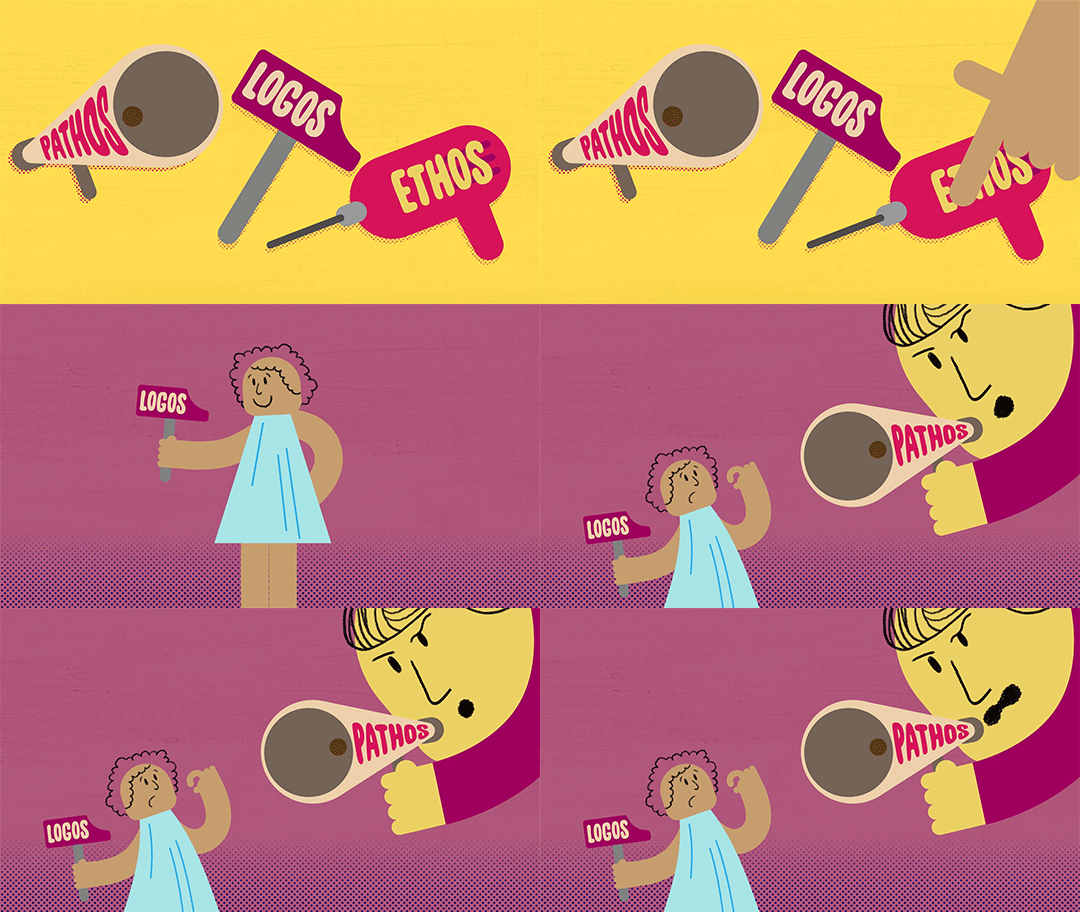
But what makes for good deliberative rhetoric, besides the future tense?According to Aristotle, there are three persuasive appeals: ethos, logos and pathos. Ethos is how you convince an audience of your credibility. Logos is the use of logic and reason. This method can employ rhetorical devices such as analogies, examples, and citations of research or statistics. But it’s not just facts and figures. It’s also the structure and content of the speech itself. The point is to use factual knowledge to convince the audience — but, unfortunately, speakers can also manipulate people with false information that the audience thinks is true. And finally, pathos appeals to emotion, and in our age of mass media, it’s often the most effective mode. Pathos is neither inherently good nor bad, but it may be irrational and unpredictable. It can just as easily rally people for peace as incite them to war. Most advertising, from beauty products that promise to relieve our physical insecurities to cars that make us feel powerful, relies on pathos.
Aristotle’s rhetorical appeals still remain powerful tools today, but deciding which of them to use is a matter of knowing your audience and purpose, as well as the right place and time. And perhaps just as important is being able to notice when these same methods of persuasion are being used on you. Below, watch the TED-Ed Lesson:
To learn something new every week, sign up for the TED-Ed Newsletter here >>
Tags: Aristotle, Language, Politics, Rhetoric, Speaking, Speech